
Hesperia Resident Lookup Records
The right first source depends on what needs to be confirmed. A property record can connect a named owner or mail recipient to an APN and situs. A recorded document can show a party's role in a transfer or lien. A court case can connect a name to a case number, filing date, party role, and public disposition. A vital record can establish an event when the requester meets the copy rules. A business filing or professional license can establish a public affiliation. A custody locator answers a current custody question. None alone proves a present home or every person in a household.
| Record | What it confirms | Where | Access |
|---|---|---|---|
| Assessor parcel | Parcel, situs, assessment facts, owner or mail-recipient fields | County PIMS | Public and access-dependent modes |
| Recorded document | Named party, document title, date, and conveyance or lien role | County Recorder | 1925-present index; counter images |
| Court case | Case number, party role, filing date, docket, and entered disposition | San Bernardino Superior Court CAP | Public search, restrictions apply |
| Vital record | Birth, death, marriage, or dissolution event details | County ARC or CDPH | Eligibility and copy type control |
| Voter record | Registration status, address, party, precinct, or election information | County ROV or state file route | Self-lookup or approved purpose |
| Business or license | Entity affiliation, credential, status, or public filing address | California SOS, FBN, DCA | Public search, board limits vary |
| Custody locator | County, state, or federal custody information | Official law-enforcement portals | Free locator, scope varies |
Match the source to the claim. A Hesperia resident lookup about an estate should begin with probate and recorded transfers. A classmate search may begin with yearbooks or the library. A claimed business identity belongs with SOS, county FBN, and license records. A court search should use the role, date, and district to separate common names.
Hesperia Lookup Assessor Matches
The assessor is often the first stop when a name and address are connected to property. PIMS documentation describes Parcel Number, Name, Situs, Assessor Map Book, Parcel Map, Tract Map, Attached Parcel, and Property ID modes. The current public access level may not expose every documented mode. Start with the known address or APN, record the situs, and then examine the owner or mailing fields. The county says assessment data is not a legal-ownership determination.
Situs and mailing address are separate facts. The situs is where the parcel sits. Mailing goes to the tax or assessment contact and may be a PO box, a trust, an entity, or a place outside Hesperia. A match between the two can support a property connection, but it does not establish who occupies the parcel. A mismatch can be useful for chronology while remaining only a correspondence clue.
When a same-name result appears, compare APN, legal description, parcel history, co-owner, date, and tract. If the question is title, move to the recorder. If the question is present registration, the county self-lookup is a different route. A resident lookup stays accurate when each source's role is written beside its result.
Hesperia Lookup Court Party Search
The San Bernardino Superior Court Court Access Portal is the main state-court party search for Hesperia-related matters. After accepting the terms, the portal offers Case Number or Party Name search modes. Party Name can be tested with spelling variants. Business Name, Case Type, Filing Date, and date range can narrow a common result. The portal spans civil, criminal, family, probate, traffic, and related categories, though dynamic controls and the oldest searchable date are not fully stated in the official text.
A public CAP result can include case number, case type, filing date, courthouse or district, party names and roles, register-of-actions entries, hearings, disposition, and eligible imaged documents. Confidential, sealed, juvenile, adoption, victim, and sensitive family materials can be omitted or limited to courthouse access. A missing image does not automatically mean the case is sealed. Ask the assigned clerk about public counter viewing and copy routes.
| CAP field or control | How to use it |
|---|---|
| Search By | Choose Case Number when known, otherwise Party Name. |
| Party or business name | Try exact and variant forms, then compare role and date. |
| Case type | Narrow the result without assuming every category has the same public fields. |
| Filing date range | Separate older or newer people with the same name. |
| Docket and disposition | Read the public procedural history and entered outcome. |
The San Bernardino Court Access Portal is shown in this Hesperia resident lookup image. 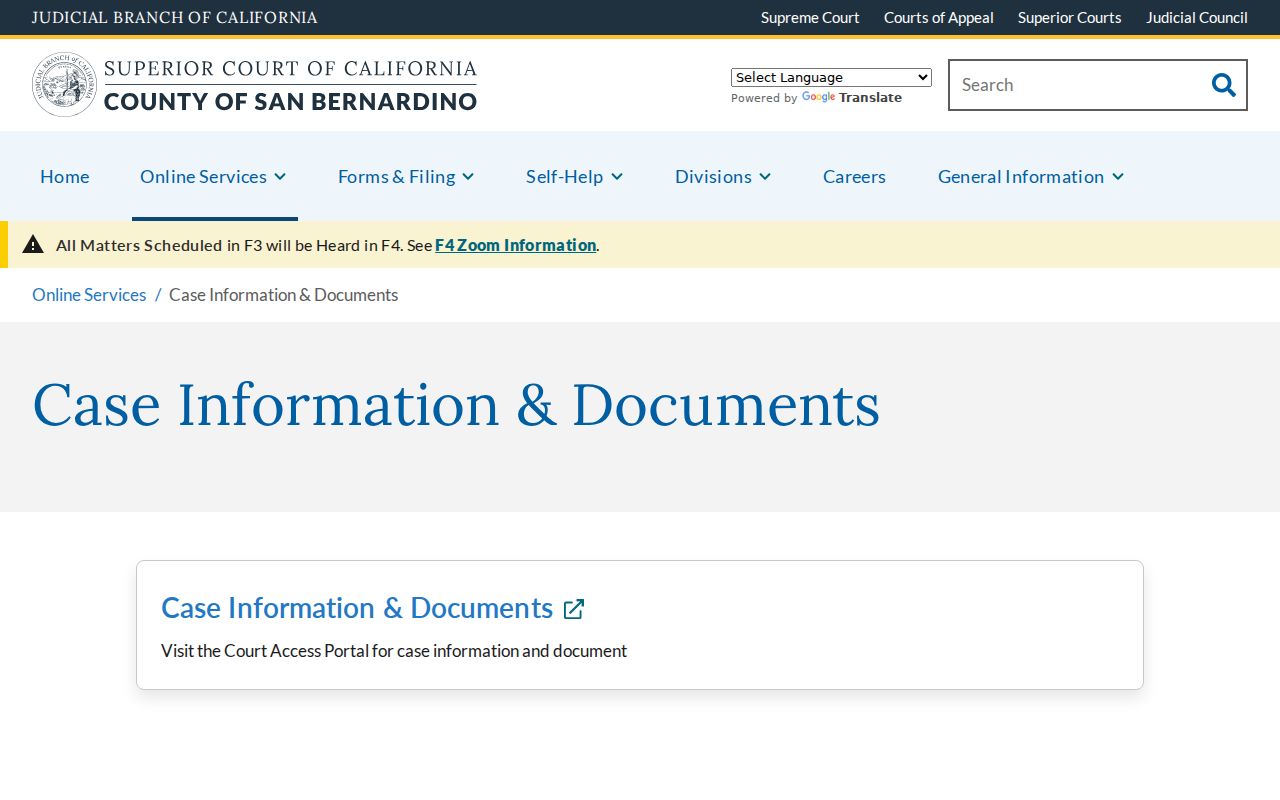 Use the case number and party role as anchors before treating a court name as an identity match.
Hesperia Federal Case Lookup
Federal matters use a separate lane. San Bernardino County is within the Central District of California, and the district court gateway explains federal access. PACER Case Locator searches federal cases by party or case number and requires an account. The research records a $0.10-per-page fee, usually capped at $3 per document, with courthouse terminals and a quarterly fee-waiver threshold. PACER is not a California Superior Court search and it is not a statewide criminal-history service.
Use the Central District site to orient the court, then PACER to locate a federal case. A bankruptcy matter belongs with the Central District bankruptcy court and PACER. A federal result can show a party, docket, filing, or document route, but sealed and redacted material remains unavailable. A federal address in a filing is dated case evidence, not proof of a current Hesperia home.
The Central District of California federal court is the orientation source. 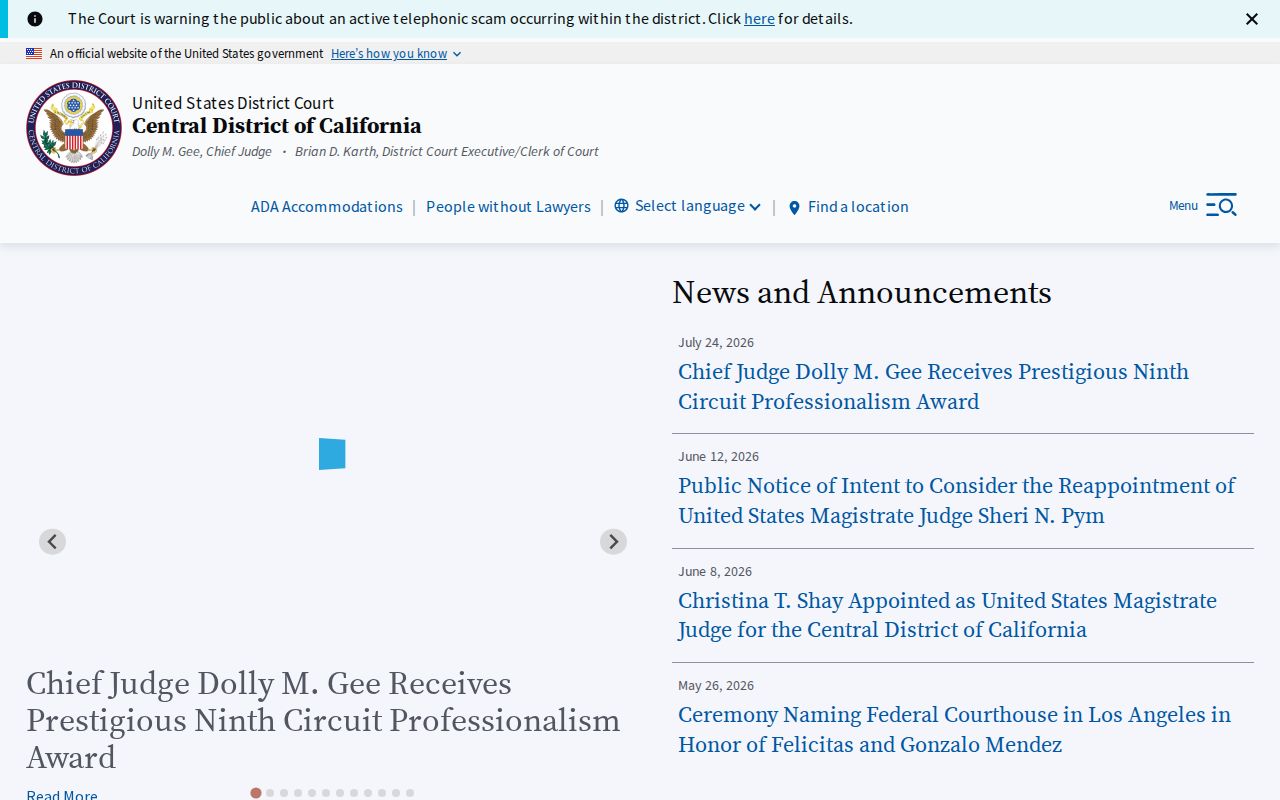 Keep federal and state docket numbers in separate notes.
The PACER Case Locator supplies the federal search route shown here. 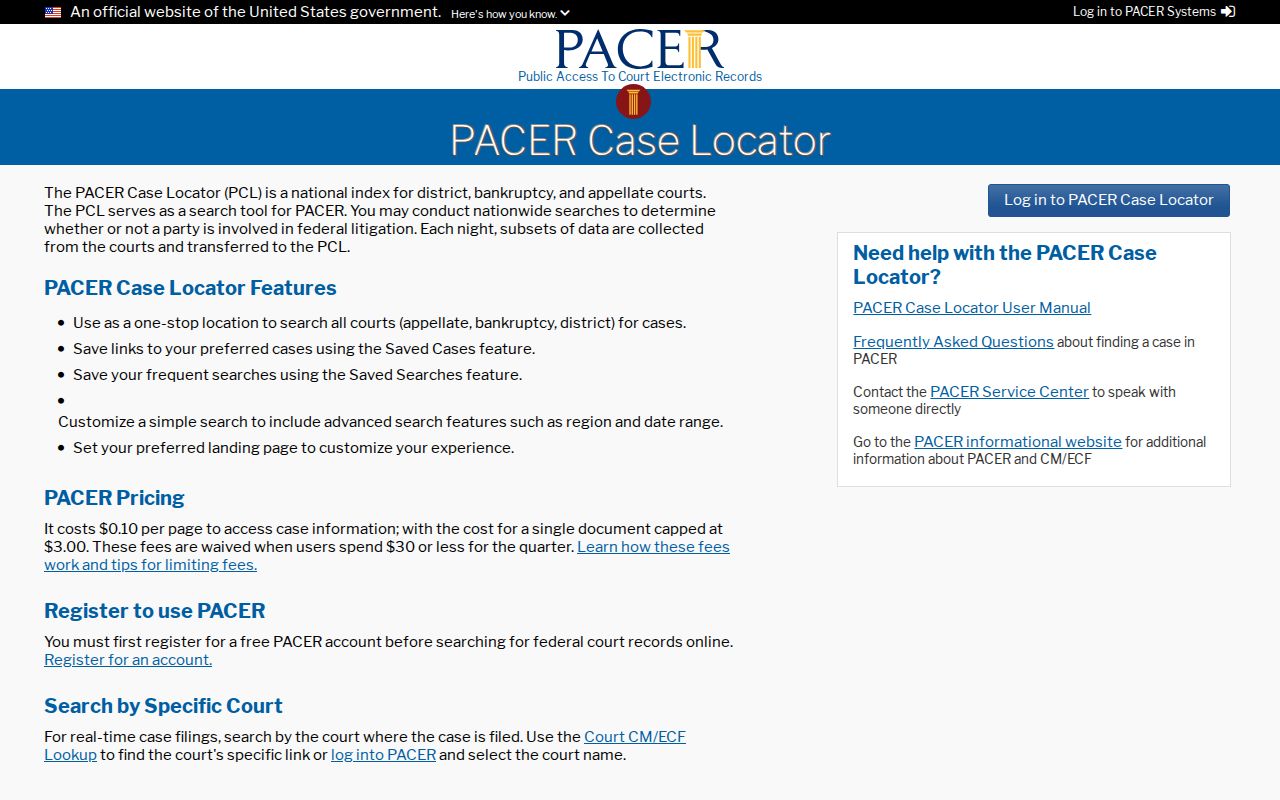 A federal case hit is useful corroboration only when its court, date, party role, and location fit the person being checked.
Hesperia Voter Self-Lookup
My Elections Gateway lets a voter check registration status and election information with first name, last name, date of birth, and conditional identity fields. The county result can include registration, addresses, party preference, districts, polling information, and whether a vote-by-mail or provisional ballot was counted. It is not a public by-name Hesperia resident lookup.
California voter files are purpose-limited under Elections Code sections 2180-2194 and 2 CCR sections 19001-19013. A specific-voter application asks for full name, date of birth, county, current or former residence clues, an authorized purpose, ID, and an original wet signature. The state route charges $30 per specific voter, up to ten with a $100 maximum, and says review normally takes 7-14 business days. County reports, maps, and weekly registration totals are safer aggregate alternatives.
A self-lookup no-match is not evidence that another person has no registration. Protected records, pending or cancelled status, spelling, identifier mismatch, and the self-service design can all matter. The resident lookup should state exactly what the voter tool did and did not confirm.
Hesperia Lookup Vital Copy Choices
San Bernardino County Recorder-Clerk serves Hesperia events at the High Desert Government Center, while CDPH provides the statewide application route. California distinguishes authorized certified copies from informational certified copies. The latter generally carry the words “INFORMATIONAL, NOT A VALID DOCUMENT TO ESTABLISH IDENTITY.” Authorized copies require an eligible relationship or legal basis and a sworn statement. Confidential marriage copies are limited to a party or court order. Adoption originals remain confidential outside a statutory or court process.
The CDPH 2026 fees recorded in research are $31 for birth, $26 for death, $19 for marriage, and $18 for dissolution. The county page displayed a different older schedule, so confirm the local amount before sending payment. The fee is a search fee even when the state issues a Certificate of No Public Record. Divorce files belong to Superior Court; a CDPH dissolution certificate is not the judgment or pleadings.
| Copy question | Correct route |
|---|---|
| Need identity-valid birth or death copy | Check the form's authorized-person categories and sworn-statement rules. |
| Need a broader informational copy | Use the county or CDPH application and accept the identity-invalid legend. |
| Need confidential marriage information | Party request or court order under the county procedure. |
| Need a divorce judgment | Search CAP, then contact the assigned family-law clerk. |
Hesperia Lookup Probate Heir Trail
Probate is a useful route when the question concerns an estate, heir, or recorded transfer after death. Search the Superior Court for a public probate case, note the case number and party roles, then follow a later recorded deed or transfer in the Recorder index. An obituary can supply a name, relative, or date to test, but it is a lead rather than proof. The strongest result connects the court case, decedent, representative, legal description, and recording date.
Do not infer a family relationship from a shared surname. Probate petitions, notices, and orders may identify personal representatives or heirs when public, while confidential or sealed details remain restricted. A recorded transfer can show what happened to the parcel without proving that an heir lived there. Keep death, probate, title, and occupancy as separate columns in the research note.
Hesperia Lookup Business Affiliations
California Secretary of State bizfile, San Bernardino County fictitious business name filings, Hesperia business-license activity reports, and Department of Consumer Affairs searches can verify a public business or credential connection. Bizfile results can include entity type, status, formation or registration date, jurisdiction, agent for service, addresses, management disclosures, and recent filing PDFs. An agent or business address is a filing location. It should not be converted into a personal residence.
DCA's advanced search can filter board or bureau, license type, license number, business name, first and last name, registry number, city, county, primary or secondary status, public documents, and disciplinary actions. Coverage varies by board, and the official pages do not state one common earliest historical year. Compare the filing date and public status with the Hesperia context before relying on a match.
Hesperia Lookup Verification
Verification means finding two independently maintained facts that fit one timeline. Start with a name and variant forms. Add a known Hesperia address, APN, legal description, case number, license number, relative, age band, or dated business affiliation. Keep negative searches and the exact spelling and date range used. When two sources disagree, ask whether one is a physical situs, tax-mail address, service address, old filing address, or historical household entry.
- Anchor the name to a stable local fact through the assessor, court, filing, directory, or known event.
- Search a second custodian with the same name variant and compare date, location, and record role.
- Read the source's limits, including index-only design, redaction, eligibility, coverage, and access date.
- Request a counter view or certified copy from the originating office when the index cannot answer the question.
- Write the conclusion narrowly, saying what the records support and what they leave open.
- Docket
- A court's chronological register of filings, hearings, orders, and other case events.
- Index versus image
- An index supplies searchable metadata; an image is the underlying document page, when access permits.
- Certified copy
- A custodian-attested copy issued under the record's eligibility and fee rules.
- Party role
- The capacity in which a person appears, such as grantor, grantee, plaintiff, respondent, or representative.
A careful Hesperia resident lookup ends with a source-based statement, not a guess about present whereabouts. That restraint protects the person being researched and makes the result more useful to a family, estate, or civic researcher.
Hesperia Resident Lookup Limits
Sealed court files, confidential vital records, protected voter registrations, DMV address information, juvenile materials, adoption records, and Safe at Home participants are deliberate boundaries. A CPRA request cannot bypass a statute, make an agency create a new directory, or turn a restricted record into a public profile. Commercial compilation tools can also merge old names and addresses, so any lead must return to the official custodian before use.
Lawful personal use. Use a Hesperia resident lookup for family history, reconnecting, estate work, civic transparency, or checking a public filing. Do not use records to stalk, harass, intimidate, or expose a protected person.